
 A few years ago, FedEx established a site called Brown Bailout to advocate against the granting of bailout funds through the Federal Aviation Administration reauthorization bill that was making its way through Congress. During the economic downturn, FedEx competitor UPS was lobbying to get this bill passed. Rather than creating all its own original content espousing its objections to the bailout, FedEx systematically curated news content from prestigious media publications like The Washington Times and The National Review that agreed with its perspective, which ultimately added more credibility to its position. The website includes editorial content that provides perspective and clarity around some of the concerns regarding the policy. Along with the original content located in the blog, the website captures the flow of information across publications around the topic at hand to provide additional support and perspective to the issue. This type of curation not only provides additional credibility to the political position but also creates a destination for news associated with the topic.
Click here to see the website

 iQ
iQ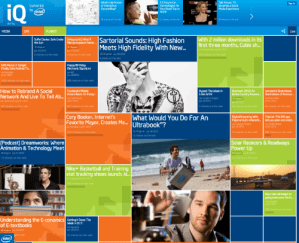
 BraveNewTalent
 The New York Times reports on how General Mills have taken a high level approach to change the public image of high sugar sweetened ceerals by launching a brand-agnostic online campaign calls Hello, Cereal where they selectively curate recipes using cereals.
 Marketers need to view content curation as a mechanism to generate leads and sales in its own right, not just a tool for creating brand awareness. But to do so, the content curator must strike a fine balance between hard conversion metrics and a structured, dynamic approach to storytelling. That’s because content curation only reaches its full potential when it evolves alongside the audience member – it’s a process, rather than the static collection which marketers sometimes assume it to be.
 In this case study, we examine how an end-user experience management company did just that through the launch of a content curation campaign. Read on to see how your company can excel in building such relationships through this content marketing strategy.
 IBM successfully bridged the gap between its social networks and its company site by developing a dynamic content destination, the Big Data & Analytics Hub. Rich in multimedia content and optimized for social sharing, the website fosters deeper engagement with its consumers.
 Content Curation Cases